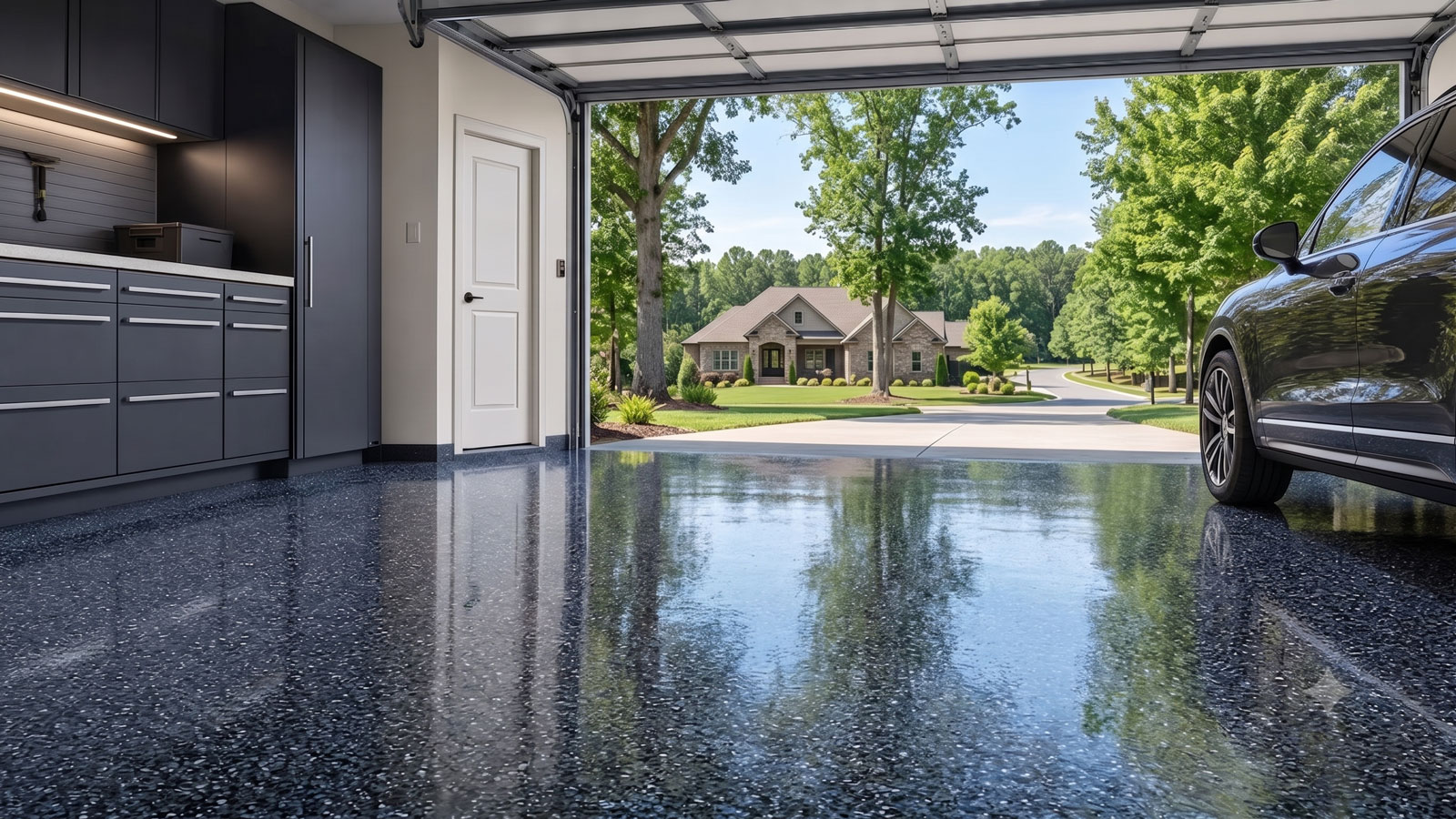
Garage Floor Coating in Cleveland, OH
Floor Coating Services in Cleveland, OH
Cleveland garages see a real four-season workload. The area's 1991–2020 climate normals include about 63.8 inches of snow and 41 inches of precipitation in a typical year, and winter road treatment puts salt and deicing residue on vehicles that later drip onto garage floors. That combination makes cleanability useful, but it also makes surface condition and preparation especially important before a coating is installed.
Cleveland also has one of the oldest housing stocks in the region. More than half of the city's homes were built before 1940, so a garage floor may have decades of paint, patching, oil exposure, utility cuts, or previous DIY coatings behind an otherwise ordinary garage door. The garage or slab may also be much newer than the house after an addition or replacement, so the property age alone is not enough to describe the concrete.
For a homeowner, the useful first step is a slab inspection rather than a product choice. Look for old coatings, glossy sealer, cracks that have been filled before, salt scaling near the door, damp areas, and changes in concrete color or texture that suggest separate pours. Those clues determine how much grinding, repair, moisture evaluation, and detail work the project may need.
Local Market Insight
Cleveland's combination of heavy winter exposure and very old housing makes slab history, salt damage, and previous repairs unusually important estimate questions.
What Affects the Cost of Garage Floor Coating in Cleveland?
Garage floor coating typically runs $6–$12 per square foot, with a typical two-car garage around $3,000–$5,500. In Cleveland, the final scope often moves within that range because of old coatings, crack and patch repair, salt-related surface wear, moisture conditions, access, and the coating system selected.
Old paint or DIY coatings
Older Cleveland garages may have several generations of paint or coating. Weak material has to be removed rather than trapped under the new system.
Cracks, patches, and utility cuts
Older properties often contain repairs from settlement, plumbing, drains, or garage alterations. Those areas need to be evaluated and prepared as part of the floor, not hidden cosmetically.
Road-salt wear
White residue, surface scaling, and deterioration near tire paths or the garage opening can increase cleaning and repair work before coating.
Moisture at the slab
Snowmelt, wet weather, drainage, and older construction can all create suspicious damp areas that deserve evaluation before primers or coatings are chosen.
Threshold and drainage condition
If the driveway pitches toward the garage or water repeatedly reaches the door line, that condition should be understood before the floor is coated.
Finish and traction
Full-flake systems, smoother decorative finishes, added traction, and premium topcoats have different material and labor requirements.
Call for a clear, project-specific estimate — or request one online.
What to look for on a Cleveland garage floor
Start at the garage opening. Cleveland's winter road salt and snowmelt tend to show up first along tire paths, the door line, and low spots where water sits. Scaling, soft concrete, white deposits, or repeatedly damp areas may call for additional cleaning, grinding, repair, or moisture investigation.
Then look for evidence that the floor has changed over time. A seam through the room, a different concrete color, patched utility trench, old drain, or filled crack can indicate more than one concrete placement or repair campaign. Proper mechanical preparation is intended to create a consistent bonding profile across those differences.
Finally, note how the garage is actually used. A west-side parking garage carrying winter traffic has different priorities from a workshop, gym, storage room, or lightly used detached garage. Cleanability, traction, UV at the opening, and return-to-service time should follow that real use pattern.
In an old city, the garage floor can be the newest part of the property
Cleveland's housing age makes one assumption especially risky: that the garage slab is as old as the house. Many homes predate modern attached-garage layouts, and garages have been added, rebuilt, enlarged, or repaired over decades. A 1920s house can therefore contain a much newer slab, while a later house may still have original concrete with decades of wear.
That distinction matters because different slabs fail in different ways. An older placement may show scaling, patching, oil contamination, or previous paint; a replacement slab may instead carry curing compounds, densifiers, or a very smooth machine finish. Both can look serviceable from a few feet away and still require different preparation.
Before comparing coating systems, ask when the garage itself was built or altered and whether the floor has ever been sealed, painted, resurfaced, or repaired. Construction joints, changes in texture, and patched wall lines often tell more of the story than the home's build year.
Practical Cleveland homeowner check
Before requesting estimates, walk the garage and note:
- white salt residue or scaling near tire paths;
- paint, sealer, or glossy concrete;
- cracks, patches, and utility cuts;
- damp areas or water marks after rain or snowmelt;
- direct sun at the garage opening;
- whether the garage is parking, workshop, gym, storage, or mixed use.
Cleveland Garage Floor Coating FAQs
Does Cleveland road salt matter for a coated garage floor?
Yes. Salt and dirty snowmelt are common winter contaminants, so preparation has to remove residue and any weakened surface concrete. After installation, a durable, easy-to-clean finish can make winter cleanup much simpler.
Can an old Cleveland garage floor still be coated?
Often, yes. Age alone is not the deciding factor. The contractor should evaluate the concrete, repairs, moisture, contamination, and any old coatings, then prepare the slab to a sound profile.
What if my garage is newer than my Cleveland house?
Treat the garage slab on its own history. A newer slab may have curing compounds, sealers, or a dense finish even when it has very little visible wear, so mechanical preparation is still important.
Why do two Cleveland estimates differ so much?
The difference is often in preparation and repair scope, coating chemistry, layer count, flake or decorative system, traction, and warranty rather than square footage alone.
Cleveland Neighborhoods & Local Context
Phone Quote Line
Speak with a floor coating specialist about your project and get a realistic estimate range.
(440) 688-8988Typical Project Cost
$3,000–$5,500
Typical range for a two-car garage. Final pricing depends on floor size, concrete condition, prep work, coating type, and finish options.
Helpful Guides
Other Service Areas