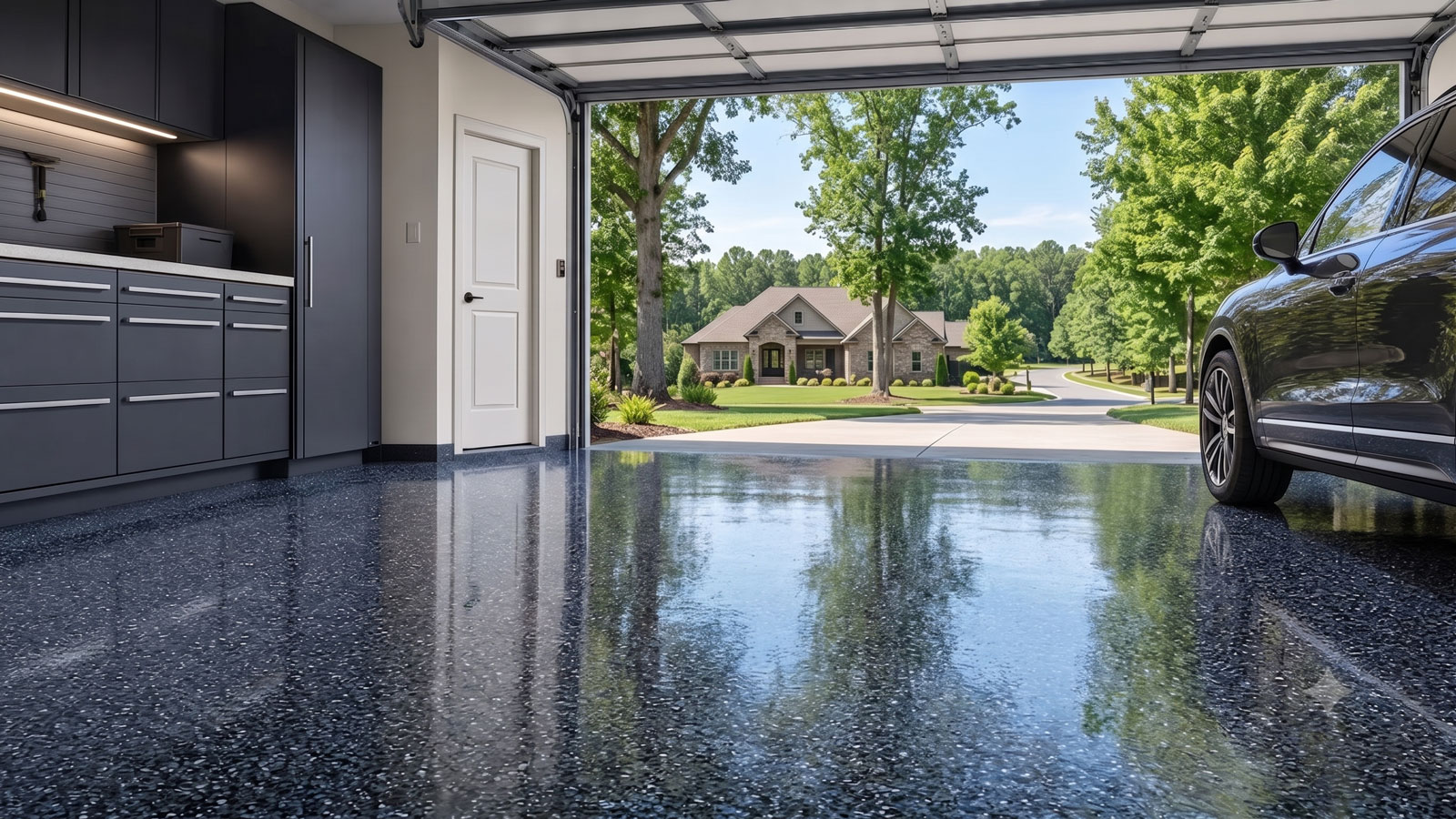
Garage Floor Coating in Westlake, OH
Floor Coating Services in Westlake, OH
Westlake is a high-value, owner-heavy western suburb: roughly 73% of occupied homes are owner-occupied, with a median owner-occupied value around $368,200. For many homeowners, the garage is part of a well-maintained property rather than a utility space to ignore, so finish quality, cleanability, and how the floor fits the rest of the home can matter alongside basic durability.
Winter still sets the harshest operating conditions. Westlake prioritizes major roads, secondary streets, and then residential streets during snow events, and larger storms bring parking restrictions that help plows work. Vehicles carry the same slush and deicing residue back into residential garages, concentrating moisture and salt along tire paths and near the door.
Westlake also contains both established neighborhoods and continuing single-family development. That means a project may begin with a decades-old slab carrying repairs and old coatings, or with newer concrete where curing compounds and surface finish are the main preparation questions.
Local Market Insight
Westlake combines high-value established housing with selective newer development, so preparation should be based on the slab's actual history rather than the neighborhood's appearance.
What Affects the Cost of Garage Floor Coating in Westlake?
Garage floor coating typically runs $6–$12 per square foot, with a typical two-car garage around $3,000–$5,500. In Westlake, project scope can move with garage size, slab repairs, previous coatings, winter wear, moisture, premium finish choices, and detail work around cabinets, steps, drains, and thresholds.
Larger garage layouts
Two- and three-car garages, storage walls, steps, and detailed edges can add square footage and labor beyond a simple open rectangle.
Salt and snowmelt
Winter residue and surface wear are common inspection points near tire paths and the door.
Existing coatings or sealer
Well-maintained garages may already have paint, clear sealer, or a previous coating that needs to be evaluated and removed where necessary.
Cracks and repairs
Older slabs may contain filled cracks or previous repairs; newer slabs can still crack or contain construction joints that need proper treatment.
Moisture and drainage
Driveway slope, threshold wetting, or darker slab areas may call for closer moisture evaluation before coating.
Decorative finish level
Full flake, custom blends, smoother decorative looks, added traction, and premium topcoats change material and labor.
Call for a clear, project-specific estimate — or request one online.
Westlake garage-floor conditions worth checking
Walk the floor after a winter drive and see where water actually travels. Tire paths, door edges, drains, and low spots show whether saltwater tends to sit or move out quickly. Repeatedly wet zones deserve special cleaning and inspection before any coating system is chosen.
On an established property, pay attention to cosmetic improvements that may hide older floor history. Fresh wall paint, cabinets, and organized storage do not tell you whether the slab has clear sealer, a failed DIY coating, or repairs beneath it. A mechanical profile should be created on sound concrete regardless of how polished the room looks.
On newer construction, ask about the slab finish and any curing or sealing products. A smooth new garage floor can still need aggressive enough preparation to open the surface for reliable adhesion.
High-value garages still need concrete-first decisions
Westlake's housing values make it tempting to approach a garage floor mainly as a design upgrade. Color blend, gloss, cabinetry, and overall appearance do matter, but the most expensive-looking finish still depends on the concrete underneath it.
Established neighborhoods can bring older slabs, repairs, or previous coatings. Newer single-family projects bring a different risk: young concrete that looks pristine but may retain curing products or a dense machine finish. Both conditions can produce adhesion problems if preparation is shortened to protect appearances or save a day.
A strong Westlake estimate should therefore explain the surface-preparation method just as clearly as the decorative system. Ask what will be removed, what repairs are included, how moisture concerns are handled, and what topcoat is used at the sunny garage opening.
Practical Westlake homeowner check
Before requesting estimates, note:
- garage square footage and number of bays;
- old coatings, sealer, or glossy concrete;
- salt residue or scaling;
- cracks, joints, and previous patches;
- cabinets, steps, drains, or storage that affect access;
- direct sun and water exposure at the garage opening.
Westlake Garage Floor Coating FAQs
Is a premium decorative coating worth it in a Westlake garage?
It can be if the appearance fits how you use the space, but decorative upgrades should come after sound preparation, repair, and a coating system appropriate for the slab.
Does Westlake snow mean I need a special floor?
The practical issue is salt, wet tires, and repeated winter cleanup. Ask how the system handles abrasion, cleaning, and traction rather than choosing a product only because it is marketed for cold climates.
Can cabinets stay in place during coating?
Sometimes, but fixed cabinets, workbenches, and storage can limit edge preparation or create uncoated areas. Discuss what will be moved or worked around before the estimate is finalized.
What should I compare besides warranty length?
Compare surface preparation, repair scope, coating chemistry, layer count, flake coverage, traction, UV-stable topcoat, cure schedule, and what the warranty actually covers.
Westlake Neighborhoods & Local Context
Phone Quote Line
Speak with a floor coating specialist about your project and get a realistic estimate range.
(440) 688-8988Typical Project Cost
$3,000–$5,500
Typical range for a two-car garage. Final pricing depends on floor size, concrete condition, prep work, coating type, and finish options.
Helpful Guides